How to create a supportive learning environment for primary aged children with FASD
Primary School ResourcesYoung people with FASD may learn and behave differently to their peers due to the impact of prenatal alcohol exposure. The challenges that students with FASD may experience in the school environment are due to neurodevelopmental impairments caused by their brain injury. Behaviours should be understood or interpreted as effects of this brain injury, rather than deliberate misbehaviour. It is possible to make adjustments and modifications to the classroom environment that allow schools to better meet the needs of young people with FASD and support their ongoing learning. Meeting the needs of young people with FASD requires a whole school approach to ensure that these students have the opportunity to reach their potential in a successful and supportive learning environment.
However, it’s important to note that each young person with FASD will have different strengths and challenges, and these strategies may not be effective every time. Maintaining flexibility is crucial in supporting young people in their ongoing learning. Additionally, FASD is so prevalent, many educators may not realise they are interacting daily with students who have undiagnosed or misdiagnosed FASD. The strategies in this factsheet will be useful to support many young people experiencing difficulties in the classroom, even if they do not have a formal FASD diagnosis. As the pathway to a FASD diagnosis can be lengthy, it’s important that support strategies are implemented as soon as possible.
1 Create a calm, uncluttered learning environment
Sensory processing difficulties can be a significant challenge for young people with FASD. Busy, noisy, and cluttered classroom environments can be overstimulating, may be a distraction and may cause anxiety. The classroom should be structured to decrease stimulation where possible. For example:
For example:
Use natural light instead of fluorescent lights that may flicker.
Minimise excess noise from outside the classroom (or allow student to use headphones to screen out noise).
Utilise cabinets or storage boxes to put away classroom supplies when not in use.
Minimise the items on the student’s desk or workspace.
2 Minimise visual distractions
Young people with FASD can easily become overwhelmed or distracted by a cluttered visual classroom environment. It’s important to minimise visual distractions in the classroom to support young people in maintaining focus and attention. While visual aids can be useful environmental cues for young people with FASD, try to ensure that they are only displayed when relevant to the current activity. For example:
Remove colourful displays or posters near the student’s workspace (or cover when not in use).
Use warm, neutral tones rather than bright colours for interior décor, furniture, and floor coverings (where possible).
Avoid hanging items on windows or ceilings.
Use black and white worksheets or cut worksheets into sections to avoid an overload of information.
3 Provide fidget items
Some young people with FASD experience a need to move or fidget frequently. This helps them to de-escalate or calm down. Fidget items can be a useful tool to assist young people with FASD to relax and focus their attention. Fidget items should be small and quiet, and can include things such as a stress ball or specialised fidget toys. Plush toys or weighted blankets may be helpful for primary-aged students, while adolescents may prefer to colour, draw or listen to music with headphones. Where possible, consider collaborating with a school counsellor or occupational therapist to develop a personalised ‘sensory diet’ of activities that help a young person regulate. However, it is important to be cautious that fidget items do not overstimulate a student.

4 Planned or consistent seating arrangements
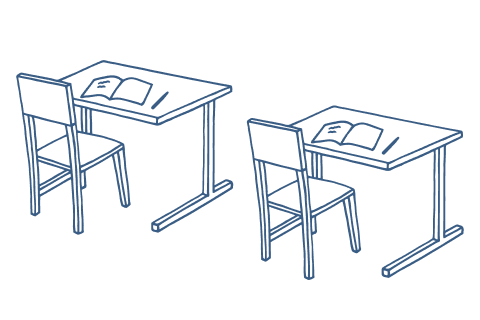
Young people with FASD benefit from consistency and routine. It’s important that a primary-aged student with FASD sits in the same seat each day. In secondary school, it may be helpful to designate a regular seat or section in each classroom. If possible, try to ensure that the young person’s seat is located away from distractions (e.g., seating the student at the front of the classroom near the teacher). A sense of safety and predictability are important for young people with FASD.

5 Ensure a consistent and well-defined classroom layout
Much like maintaining a permanent seating location, young people with FASD will benefit from a consistent classroom layout that is easy to navigate. Avoid rearranging or making significant changes to the layout of furniture in the classroom. It can also be helpful to clearly demarcate different spaces in the classroom. In primary classrooms, coloured tape can be used to define personal boundaries when lining up or sitting on the floor. This can assist a student with FASD to ensure they don’t intrude on another student’s personal space. In secondary or specialist classrooms (such as art rooms and science or computer labs), keep equipment and materials in clearly labelled and consistent areas.
6 Provide a calm and quiet breakaway space
It’s important to provide a calm and quiet breakaway space in the classroom where a student with FASD can go when they are feeling overwhelmed, frustrated, or need time to calm down. This space can also be utilised to allow a student to independently move away from their peers and complete tasks without distractions. It’s important to remember that these spaces should never be used for punishment, but as a tool to positively support students with FASD to learn self-regulation. As young people with FASD often have difficulty communicating their needs effectively, physical ‘pause cards’ can help them signal to teachers when they need a break. Clear rules and expectations should be agreed upon, including when the space can be used and how long they can stay before they should return to class. Where possible, these expectations may be visually signposted or written in an adolescent’s timetable. A breakaway space could be:
A quiet area with cushions on the floor (defined by coloured tape to create clear boundaries).
A small cubicle or carrel desk.
A small tent or enclosed space.
For secondary students, a quiet supervised space such as the library
In the absence of a physical space, students may be able to achieve ‘time out’ by using headphones.
For more information on creating calm spaces, watch InclusionED’s video on providing calm, safe spaces for secondary students or AERO’s practice guide on creating calm, focused classrooms.
7 Identify and minimise specific triggers in the environment
Every individual with FASD has different strengths and faces different challenges. It is important to adapt and personalise the classroom environment (where possible) to support each student according to their individual needs. When a young person with FASD is in a school environment, there may be certain sounds, smells, sensations, or other distractions that impact on their ability to learn and behave appropriately. Specific triggers may be small or unnoticeable to others in the classroom, such as a light buzzing, a ticking clock, the smell of someone’s food, or an irritating clothing tag. Identifying, removing, or understanding these triggers can enable a student to engage and participate in learning.

References
Basaraba, D. (2016). FASD: From isolation to inclusion in Australian schools. [Doctoral thesis, Deakin University]. https://dro.deakin.edu.au/eserv/DU:30089393/basaraba-fasdfrom-2016A.pdf.
Blackburn C. (2021) Supporting a Child with FASD in the Classroom. In: Mukherjee R.A.S., Aiton N. (eds) Prevention, Recognition and Management of Fetal Alcohol Spectrum Disorders. Springer, Cham. https://doi.org/10.1007/978-3-030-73966-9_29
Carpenter, B. (2011). Pedagogically bereft! Improving learning outcomes for children with foetal alcohol spectrum disorders. British Journal of Special Education, 38(1), 37–43. https://doi.org/10.1111/j.1467-8578.2011.00495.x
Coles, C.D., Taddeo, E., & Millians, M. (2011). Innovative educational interventions with school-aged children affected by Fetal Alcohol Spectrum Disorders (FASD). In S.A. Adubato & D.E. Cohen (Eds.), Prenatal Alcohol Use and Fetal Alcohol Spectrum Disorders: Diagnosis, Assessment and New Directions in Research and Multimodal Treatment. Bentham Science Publishers, Sharjah, UAE.
Fisher, A. V., Godwin, K. E., & Seltman, H. (2014). Visual Environment, Attention Allocation, and Learning in Young Children. Psychological Science, 25(7), 1362–1370. https://doi.org/10.1177/0956797614533801
Gaines, K. S., & Curry, Z. D. (2011). The Inclusive Classroom: The Effects of Color on Learning and Behavior. Journal of Family & Consumer Sciences Education, 29(1).
Millar, J. A., Thompson, J., Schwab, D., Hanlon‐Dearman, A., Goodman, D., Koren, G., & Masotti, P. (2017). Educating students with FASD: linking policy, research and practice. Journal of Research in Special Educational Needs, 17(1), 3–17. https://doi.org/10.1111/1471-3802.12090
Mitten, H.R. (2013). Evidence-based practice guidelines for Fetal Alcohol Spectrum Disorder and literacy and learning. International Journal of Special Education, 28(3), 44-57. https://files.eric.ed.gov/fulltext/EJ1024410.pdf
Weston, J. & Thomas, S. (2018). Fetal alcohol spectrum disorder (FASD) and complex trauma: a resource for educators. Fitzroy Crossing, WA: Marninwarntikura Women’s Resource Centre.
Project partners